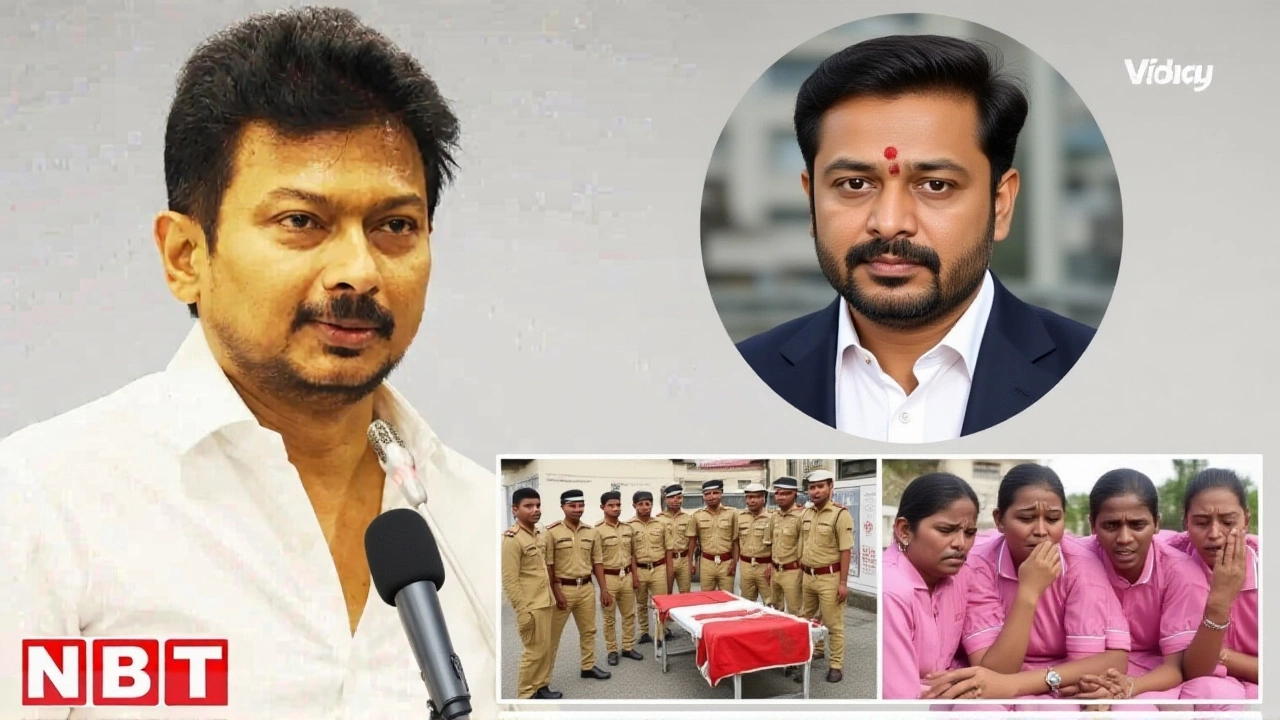
It’s a plot twist that would make even the biggest fans of C. Joseph Vijay, Chief Minister of Tamil Nadu, raise an eyebrow. Just days after taking oath, the state government appointed Vijay’s personal astrologer to a senior political post—only to scrap it within 24 hours following a legal firestorm and intense public backlash.
The appointment of Rikki Radhan Pandit Vettrivel as an Officer on Special Duty (OSD) in the Chief Minister’s Office was announced via a government order on May 12. But by the next day, the decision was reversed amid mounting pressure from the judiciary, opposition parties, and critics who argued it undermined scientific temper and constitutional norms.
A Controversial Start to a New Administration
Here’s the thing: this wasn’t just any bureaucratic hiring. Vettrivel isn’t a career administrator or a policy expert. He’s known publicly as Vijay’s personal astrologer—a role he played during the recent election campaign where he famously predicted a “tsunami victory” for Vijay’s Makkal Needhi Maiam party.
According to reports from Live Hindustan and multiple television networks, Vettrivel had advised Vijay to persist with his claim to form the government even after the Governor repeatedly rejected his initial attempts. That advice apparently paid off when Vijay eventually succeeded in forming the council of ministers.
Then came the swearing-in ceremony on May 10. Originally scheduled for 1:35 PM, the event was moved to 10:00 AM based on astrological calculations provided by Vettrivel. The timing change sparked immediate questions about whether governance decisions were being influenced more by horoscopes than policy briefs.
The Legal Challenge That Changed Everything
Turns out, not everyone was happy with the direction things were heading. On May 13—the same day Vijay’s government proved its majority in the Tamil Nadu Legislative Assembly with 144 votes against 22—a petition was filed at the Madras High Court.
The petitioner argued that appointing someone directly to an OSD position without following standard recruitment procedures violated Article 309 of the Constitution, which governs rules for public service appointments. They cited the landmark Supreme Court judgment in *State of Karnataka v. Umadevi*, which mandates transparent, merit-based selection processes for all government posts.
“There is no record of budget allocation for this post,” the petitioner noted in court documents. “This appointment bypasses equal opportunity principles under Articles 14 and 16.”
In other words, while stars might align in the sky, they don’t override constitutional law.
Political Fallout and Public Reaction
The backlash didn’t stop at the courtroom. Opposition leaders quickly labeled the move as regressive, accusing the new administration of promoting superstition over science. Even some coalition partners expressed discomfort, fearing it could damage their credibility among urban voters.
One TV anchor summed up the mood perfectly during a live debate: “Will Tamil Nadu now be governed by astrology?” It was a rhetorical question—but one that resonated deeply across social media platforms and news editorials alike.
Interestingly enough, despite receiving the official joining letter, Vettrivel never actually assumed charge. His name appeared in internal communications, but there’s no evidence he ever stepped into an office or attended a meeting.

Why This Matters Beyond Chennai
This incident highlights a broader tension between tradition and modernity in Indian politics. While many politicians consult astrologers privately, making such relationships formal through government appointments crosses a line for many citizens.
Consider the precedent set here: if personal advisors can be elevated to official roles without scrutiny, what stops others from doing the same? And how does that affect trust in institutions meant to serve all people equally?
Experts point out that similar controversies have arisen before—in Maharashtra, Uttar Pradesh, and elsewhere—but none quite like this combination of celebrity status, electoral success, and rapid reversal.
What Happens Next?
As of now, the case remains pending before the Madras High Court. No further hearings have been scheduled, and neither side has commented publicly since the cancellation.
Vijay’s team has stayed silent, focusing instead on legislative priorities and development agendas. Whether this episode will resurface in future debates depends largely on upcoming judicial rulings and political dynamics.
For now, the lesson seems clear: in democracy, popularity doesn’t exempt you from process—and sometimes, even the most trusted advisor needs to stay outside the bureaucracy.
Frequently Asked Questions
Who is Rikki Radhan Pandit Vettrivel?
He is a well-known astrologer who served as the personal advisor to C. Joseph Vijay during the 2024 Tamil Nadu elections. He gained attention for predicting Vijay’s landslide win and advising him on key strategic moves, including when to approach the Governor again after initial rejections.
Why was the OSD appointment controversial?
The appointment bypassed standard recruitment procedures required under Article 309 of the Indian Constitution. Critics argued it favored personal loyalty over merit, lacked transparency, and contradicted the principle of equal opportunity enshrined in Articles 14 and 16.
Did Vettrivel actually work in the government?
No. Although he received an official joining letter dated May 12, he never formally took charge. The appointment was canceled within 24 hours due to legal challenges and political pressure, meaning he held no functional role in the administration.
What did the Madras High Court say about the case?
The court hasn’t issued any final ruling yet. A petition challenging the appointment was filed on May 13 citing violations of constitutional provisions related to fair recruitment. The matter is currently sub judice, and no hearing date has been announced.
How did the public react to the appointment?
Reaction was sharply divided. Supporters viewed it as a reward for loyal counsel, while opponents criticized it as anti-science and unconstitutional. Social media erupted with memes and commentary questioning whether governance would become dependent on astrological guidance.
Was the swearing-in time changed because of astrology?
Yes. Originally planned for 1:35 PM on May 10, the ceremony was shifted to 10:00 AM following recommendations from Vettrivel. This detail fueled speculation about the extent of astrological influence on high-level governmental decisions.